
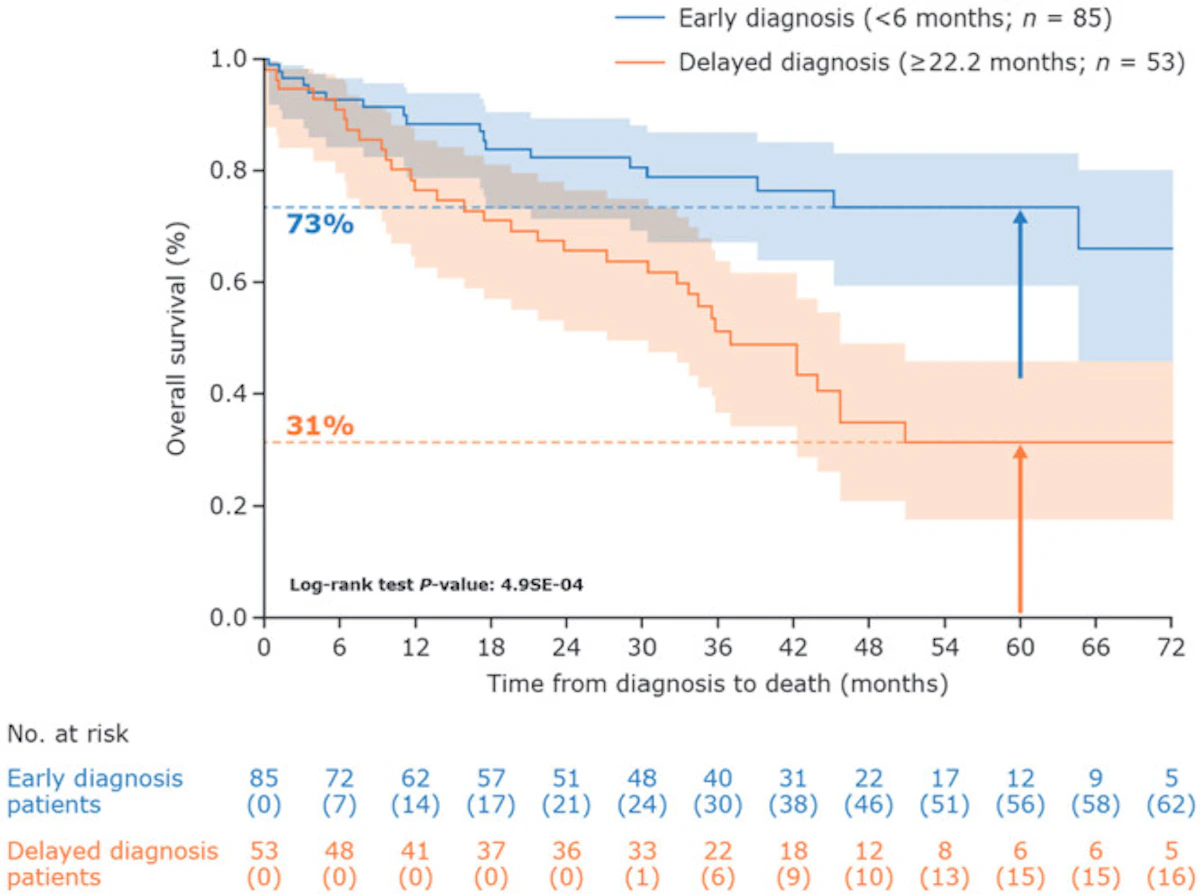
Earlier diagnosis was associated with substantially higher five-year survival, while COPD and several common clinical findings were linked to longer delay.
The research question
Which factors are associated with delayed pulmonary arterial hypertension diagnosis, and how does timing relate to survival?
Overview
A Mayo Clinic cohort traced the tests, specialists and clinical factors associated with pulmonary-arterial-hypertension diagnosis timing. PAH symptoms resemble common cardiopulmonary conditions. Understanding where the diagnostic journey stalls can inform screening and referral pathways. PAH symptoms resemble common cardiopulmonary conditions. Understanding where the diagnostic journey stalls can inform screening and referral pathways.
Study design & methods
Adults with catheter-confirmed PAH between 2015 and 2019 were identified in Mayo Clinic records. Early diagnosis meant less than six months; long delay meant at least 22.2 months. The final cohort included eighty-five early, twenty-two intermediate and fifty-three delayed diagnoses.
Testing moved faster than definitive diagnosis
Median time from an eligible event was seven days to chest X-ray, thirteen to ECG, twenty-six to echocardiography and 123 to right-heart catheterization. A pulmonologist was the first specialist seen for 35.3% of early-diagnosis patients versus 22.6% of delayed-diagnosis patients.
Limitations & interpretation
The results point toward referral and screening opportunities when symptoms persist despite a more common initial explanation. The authors call for external validation and work focused on modifiable causes of diagnostic delay. Single-center retrospective cohort.
Publication type and venue follow the original nference listing. Read the original paper for full methods, analyses, and interpretation. View source listing.