
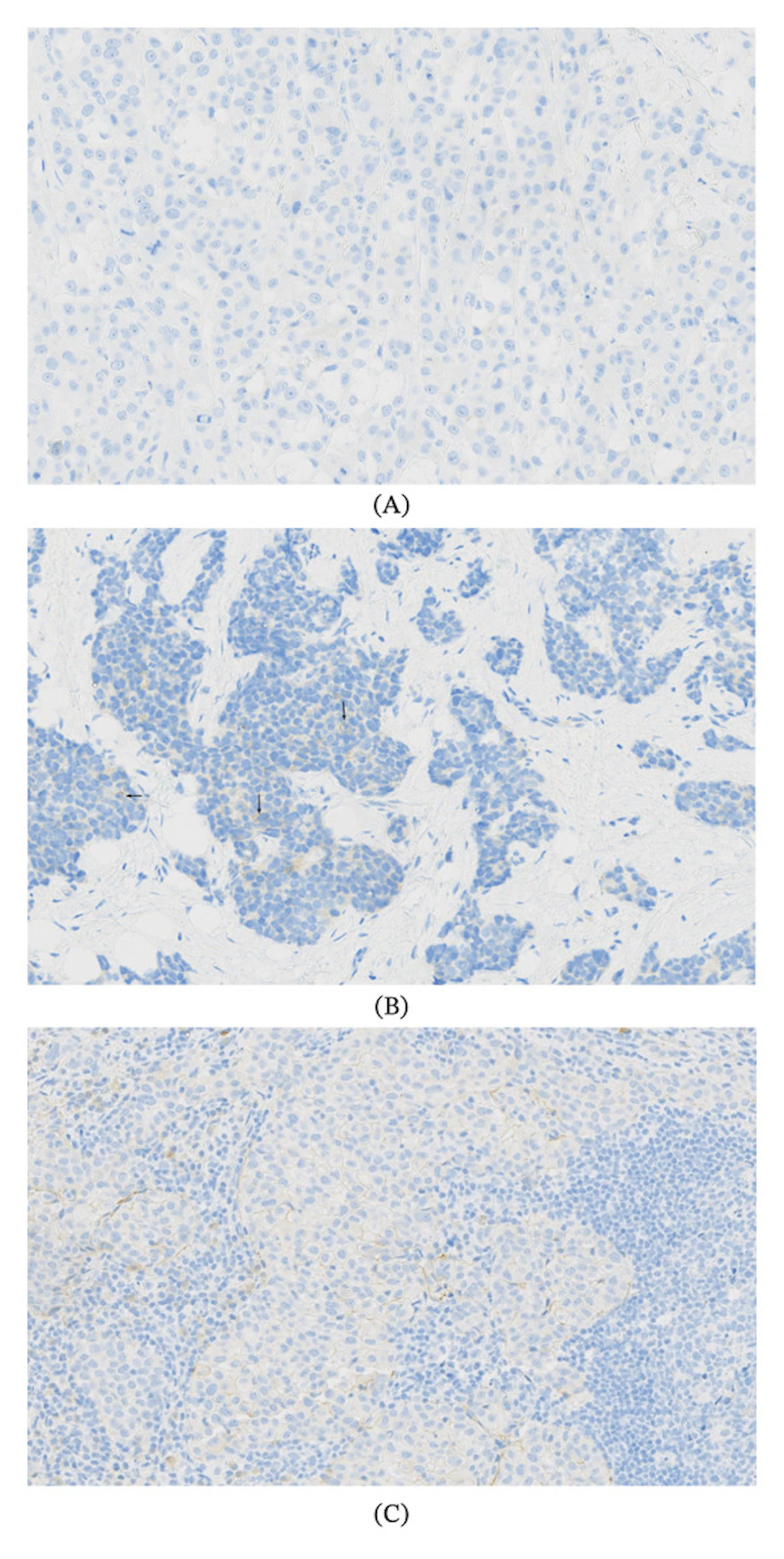
Sixty percent of samples that remained IHC 0 for at least one reviewing pathologist met HER2-ultralow criteria for at least one pathologist.
The research question
How often do advanced breast cancers originally scored HER2 IHC 0 show ultralow membrane staining when slides are reviewed again?
Overview
Independent re-scoring of digitized pathology slides found a potentially treatment-relevant HER2-ultralow group—and substantial disagreement between pathologists. The boundary between no staining and ultralow expression may affect eligibility for newer HER2-directed therapies, making scoring consistency clinically consequential.
Study design & methods
The cohort contained 300 patients with stage III or IV breast cancer and an HER2 IHC 0 result documented between 2017 and 2023. The mean patient age was 57.7 years, and slides were interpreted without turning the exercise into a consensus review.
Ultralow calls were common, but agreement was limited
At least one pathologist kept 285 samples in the IHC 0 category. Of those, 60% were called HER2-ultralow by at least one reviewer; the per-pathologist prevalence ranged from 43% to 45%. Time to treatment failure varied by hormone-receptor status and line of therapy, but the cohort was not designed to establish comparative treatment effectiveness.
Limitations & interpretation
The study suggests that many patients historically labeled IHC 0 could fall into a treatment-relevant ultralow category under newer definitions. Funding and employee relationships with nference, Daiichi Sankyo and AstraZeneca are disclosed in the publication. Retrospective cohort.
Publication type and venue follow the original nference listing. Read the original paper for full methods, analyses, and interpretation. View source listing.